
Introduction
In today’s competitive business environment, having a great product or service is not always enough to attract customers. Businesses also need to build a strong online presence, communicate their value, and reach the right audience at the right time. This is where digital marketing becomes essential.
Digital marketing allows businesses to promote their products and services through online channels such as search engines, social media, websites, email, and digital advertising. Unlike many traditional marketing methods, digital marketing provides opportunities to target specific audiences, measure campaign performance, and improve strategies based on real results.
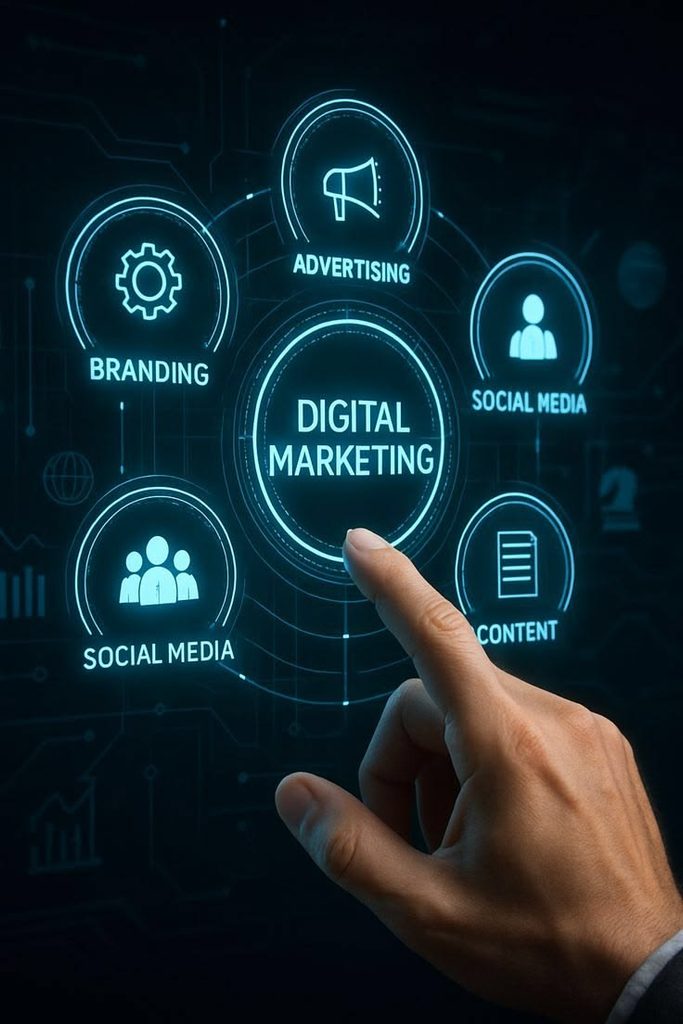
For small businesses, startups, and local brands, digital marketing can be a powerful way to increase brand awareness, generate leads, and build long-term customer relationships.
1. Build a Strong Online Presence
The first step toward digital growth is creating a professional online presence. Customers often search online before choosing a product, service, or business. If they cannot find your business online, they may choose a competitor instead.
A business website acts as a digital storefront where potential customers can learn about your services, explore your products, read testimonials, and contact you.
Your website should include clear service descriptions, contact information, relevant images, customer reviews, and strong calls to action. It should also work smoothly on mobile devices because many users browse the internet through smartphones.
In addition to a website, businesses should maintain updated social media profiles and, when relevant, a Google Business Profile to help customers discover local services.
2. Use Social Media Marketing to Build Brand Awareness
Social media platforms such as Instagram, Facebook, LinkedIn, and YouTube help businesses connect with potential customers and develop a recognizable brand identity.
However, successful social media marketing involves more than posting promotional messages. Businesses need to publish content that educates, entertains, inspires, or solves customer problems.
For example, a clothing brand can share styling tips, a restaurant can publish food videos, and a digital marketing agency can explain how businesses can improve their online visibility.
A balanced content strategy can include:
- Educational posts that answer common customer questions.
- Behind-the-scenes content that builds trust.
- Customer testimonials that demonstrate credibility.
- Reels and short videos that attract attention.
- Promotional posts that encourage enquiries or purchases.
Consistency is important, but quality matters more than posting simply to meet a daily target. Businesses should monitor engagement, profile visits, website clicks, enquiries, and conversions to understand what works best.
3. Improve Visibility with Search Engine Optimization
Search Engine Optimization (SEO) helps businesses improve their visibility in unpaid search engine results. It can attract people who are actively looking for specific products, services, or information.
For example, a fabrication business in Pune could create useful website content around searches such as “aluminium window manufacturers in Pune” or “custom glass railing services near me.”
An effective SEO strategy includes keyword research, helpful content, relevant page titles, optimized images, a mobile-friendly website, and a clear website structure.
Local SEO is especially useful for businesses serving a particular city or region. Maintaining accurate business details, adding genuine project photographs, collecting authentic customer reviews, and updating service information can help customers discover and evaluate a local business.
SEO generally requires time and consistent effort. Businesses should focus on providing genuine value rather than relying on keyword stuffing or shortcuts that can damage their search visibility.
4. Generate Leads with Paid Digital Advertising
Organic marketing helps businesses build visibility over time, while paid advertising can provide additional reach and targeted traffic.
Platforms such as Google Ads and Meta Ads allow businesses to create campaigns based on marketing objectives, audience characteristics, location, interests, and online behavior.
For instance, a local service provider can run a lead-generation campaign targeting potential customers within a selected service area. An e-commerce business can promote specific products to audiences likely to purchase them.
Before launching an advertising campaign, businesses should define their objective, target audience, budget, offer, creative format, and desired action.
It is also important to track meaningful metrics, including cost per lead, conversion rate, customer acquisition cost, and return on advertising spend where applicable.
Spending more money does not automatically guarantee better results. Testing different messages, audiences, and landing pages can help businesses understand how to use their advertising budgets more effectively.
5. Create Valuable Content to Build Trust
Content marketing is the process of attracting and engaging an audience by publishing useful and relevant information. It can include blogs, videos, infographics, case studies, social media posts, and email newsletters.
When businesses consistently answer customer questions, they demonstrate knowledge and give potential customers reasons to trust their brand.
For example, a digital marketing agency can publish blogs about SEO mistakes, social media strategies, online advertising, and website optimization. These resources can attract relevant visitors and help readers understand the agency’s expertise.
Artificial intelligence tools can support content research, brainstorming, outlining, and editing. However, content should be checked for accuracy, originality, and relevance before publication.
The strongest content combines useful information with practical examples, human experience, and a distinctive brand voice.
6. Use Data to Make Better Marketing Decisions
One of the biggest advantages of digital marketing is the ability to measure performance.
Tools such as Google Analytics and advertising platform reports help businesses understand how people discover their websites, which campaigns generate enquiries, and where customers leave the buying process.
For example, if a campaign attracts many website visitors but produces very few enquiries, the business may need to improve its landing page, offer, messaging, or audience targeting.
Regularly reviewing performance helps marketers identify opportunities, reduce wasted spending, and make informed adjustments.
Businesses should establish clear goals before launching campaigns and select metrics that directly relate to those goals.
7. Turn Customers into Long-Term Supporters
Digital marketing should not stop after a customer makes a purchase. Maintaining relationships with existing customers can encourage repeat purchases, referrals, and positive reviews.
Businesses can use email marketing, permission-based WhatsApp communication, loyalty programs, helpful follow-up messages, and personalized offers to stay connected with customers.
For example, a business can share product care tips after a purchase or send relevant updates about new services.
Communication should remain useful and respectful. Businesses must obtain appropriate consent and provide customers with suitable ways to manage or stop marketing messages.
Conclusion
Digital marketing offers small businesses practical opportunities to compete, reach new audiences, and grow their customer base. By building a strong online presence, investing in social media, improving SEO, running targeted advertisements, creating valuable content, and analyzing performance, businesses can develop a more effective marketing strategy.
The key is to avoid trying every platform at once. Start with clear business goals, understand your target audience, choose the most relevant channels, and measure your progress consistently.
Digital growth is not just about getting more clicks or followers. It is about reaching the right people, building trust, and turning attention into meaningful business results.
Digital Ayaam — Your Growth. Our Digital Mindset.